


By Florence Joshua
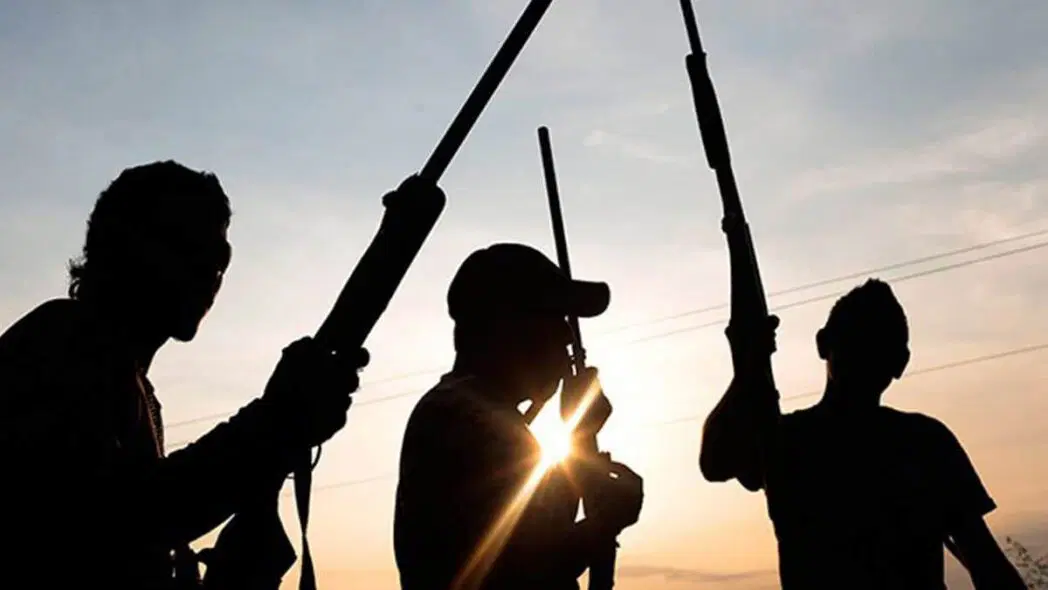
KADUNA, Nigeria — Across several communities in Kajuru, Kachia and Chikun Local Government Areas of Kaduna State, residents are living under a brutal system of control imposed by armed kidnappers, where daily life is dictated by fear, violence and the constant threat of death.
Accounts gathered from residents who managed to escape describe a reality in which criminal groups have become the de facto authorities, controlling movement, farming, commerce and even family life.
To protect survivors from possible reprisals, some identities and community names have been withheld.
One survivor, who spent about a week escaping from a community in Kajuru LGA, described years of living under what he called “total captivity.”
According to him, residents were compelled to accept an arrangement after repeated attacks left them with few options. He alleged that armed men now dictate virtually every aspect of life in the community.
The father of five recounted that married women are routinely subjected to sexual violence by the armed groups.
“If they leave a blanket or a stick in front of your house, it means they have chosen your wife or daughter for that night,” he said. “The husband must sleep outside. If he resists, he is killed.”
The allegations could not be independently verified, but they mirror testimonies from other residents who have fled similar communities in southern Kaduna.
Residents also alleged that they are forbidden from owning mobile phones, torchlights, new motorcycles or new clothing. Any violation, they said, is punishable by death.
“They search anyone carrying a bag. Phones are not allowed. Torchlights belong only to the bandits. If you buy new clothes or a new motorcycle, they simply take them,” the survivor alleged.
Farming, the main source of livelihood, is reportedly permitted only under strict conditions.
According to the survivor, residents surrender a quarter of every harvest to the armed groups, while petrol is supplied and sold exclusively by the criminals controlling the communities.
Movement is also tightly restricted.
Men reportedly require permission to leave the community for markets, often leaving behind their wives and children as a guarantee of their return. Women are sometimes allowed to travel to neighbouring communities that are also under similar arrangements.
Young men, survivors alleged, are frequently forced to participate in criminal operations.
“They make the youths ride motorcycles while they sit behind carrying guns during attacks or kidnappings. Anyone who refuses is shot,” the survivor claimed.
Religious activities have also been severely disrupted.
Residents said church services can only hold when armed men are absent, while schools and Primary Healthcare Centres have effectively collapsed after teachers and health workers fled because of insecurity.
Survivors further alleged that the armed groups occasionally execute residents publicly to instill fear and discourage resistance.
Security analysts say such accounts point to the emergence of criminal governance, where armed groups replace state authority by imposing their own rules through violence and intimidation.
Local sources estimate that more than 20 communities in Kajuru LGA, around 30 in Kachia LGA and several others in Chikun LGA are living under varying forms of such arrangements, although the exact number could not be independently confirmed.
The Kaduna State Government and security agencies have repeatedly pledged to dismantle criminal networks operating across the state, while military operations against armed groups continue in parts of north-west Nigeria.
However, for many residents still trapped in these isolated communities, freedom remains elusive.
Their stories paint a disturbing picture of communities where basic rights, dignity and security have been replaced by fear, and where survival often depends on obeying the rules of those wielding the guns.
Editor’s Note: This report contains allegations from eyewitnesses and survivors. Due to security concerns and the difficulty of independently verifying events in inaccessible communities, some claims remain unverified. Identities and specific locations have been withheld to protect sources.







Leave a Reply