

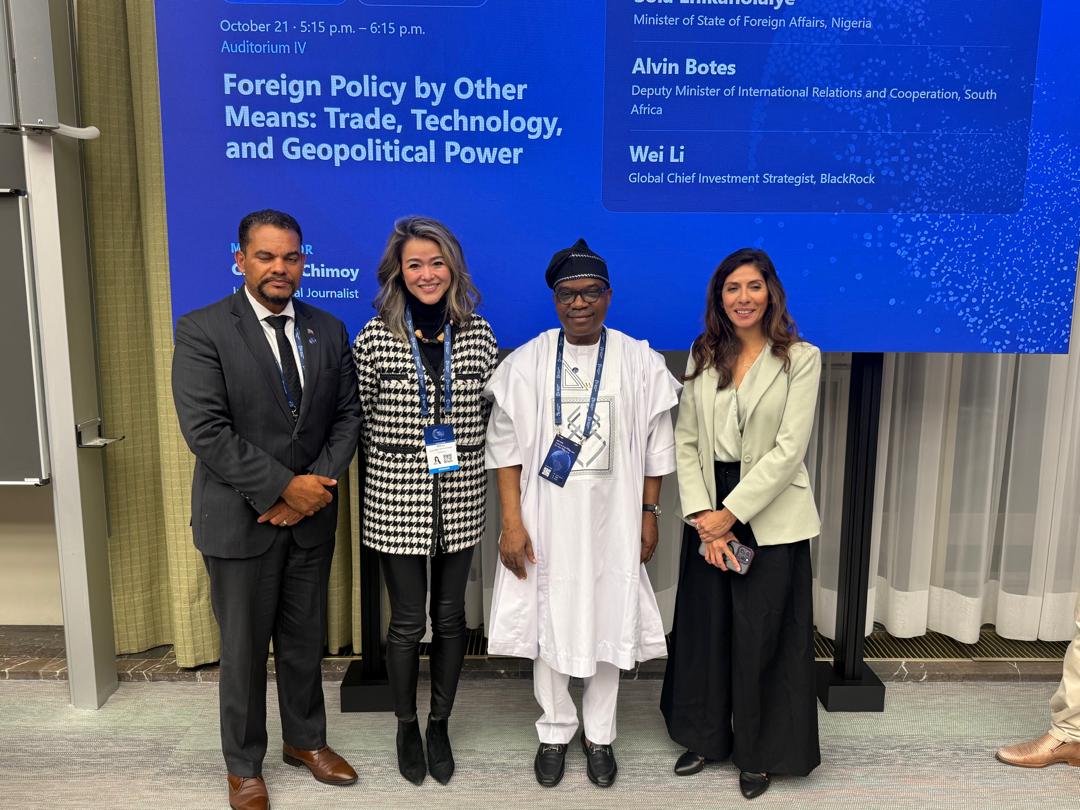
Nigeria has called for a new model of engagement between Africa and the international community based on national sovereignty, strategic autonomy, domestic resource mobilisation and investment in bankable infrastructure projects.
The Minister of State for Foreign Affairs, Amb. Sola Enikanolaiye, made the call at the Berlin Global Dialogue 2026 in Germany, where he participated in high-level discussions on trade, technology, geopolitical power, infrastructure and investment.
Enikanolaiye said Africa was determined to shape its development priorities through partnerships founded on mutual respect and shared prosperity.
He argued that foreign capital should complement, rather than replace, domestic resources, citing the need for African countries to mobilise local investment to reduce dependence on external financing.
The minister also emphasised Nigeria’s commitment to strategic autonomy, saying the country must maintain the freedom to pursue its national interests irrespective of ideological differences among global powers.
On mineral resources, he called for an end to the export of unprocessed raw materials, urging investors to establish local processing industries to create jobs and increase value addition. He added that the Federal Government was strengthening environmental safeguards and protecting communities in mineral-producing areas.
Addressing infrastructure financing, Enikanolaiye identified reliable electricity, efficient transport networks and digital connectivity as essential to expanding production and creating opportunities for Africa’s growing youth population.
He said bankable projects, predictable regulations, transparent procurement and credible risk-sharing arrangements were critical to attracting long-term investment. He highlighted the roles of Afreximbank, the African Development Bank, the ECOWAS Bank for Investment and Development and the proposed African Credit Rating Agency in supporting financing and reducing investment risks.
The minister also called for increased intra-African trade through the African Continental Free Trade Area (AfCFTA), improved cross-border payment systems and economic integration. He cited the Pan-African Payment and Settlement System (PAPSS) and Nigeria’s single-window trade system as important initiatives.
He further advocated reforms to the international credit-rating system, improved technical education and greater mobilisation of diaspora remittances to address Africa’s infrastructure and development financing needs.
On the sidelines of the dialogue, the Nigerian delegation, led by Enikanolaiye and the Minister of Budget and Economic Planning, Senator Abubakar Atiku Bagudu, held a bilateral meeting with Lesotho’s Foreign Minister, Limpho Justice Tau.
The meeting, also attended by Nigeria’s Ambassador to Germany, Senator Ita Enang, focused on strengthening bilateral relations and exploring the establishment of Lesotho’s diplomatic presence in Abuja.
Tau commended Nigeria’s historical role in African liberation and invited Nigerian industrialists, including the Dangote Group, to explore investment opportunities in Lesotho. The discussions are expected to advance cooperation through AUDA-NEPAD.



Leave a Reply