

By Florence Joshua| Abuja
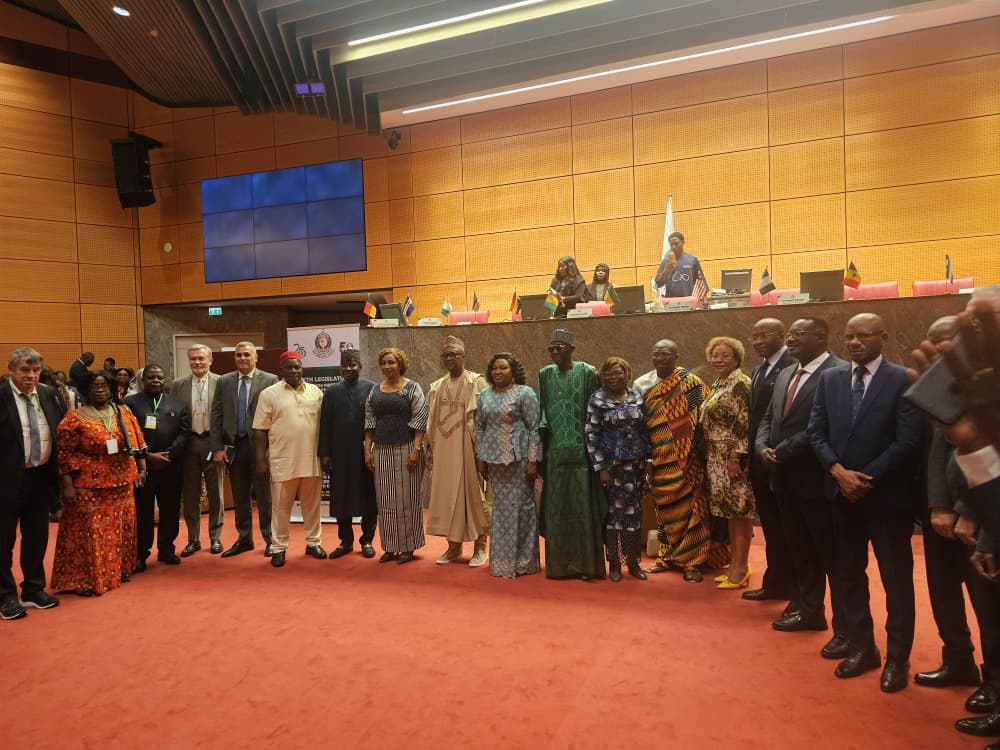
The Sixth Legislature of the ECOWAS Parliament formally opened its First Ordinary Session for 2026 in Abuja on Monday, with regional leaders calling for renewed commitment to democracy, security, and deeper integration across West Africa.
Delivering the opening address, the President of the ECOWAS Parliament, Hadja Memounatou Ibrahima, described democracy as the “unshakeable foundation” of the regional bloc, even as she urged vigilance amid evolving political and security challenges.
“Developments within our region reaffirm the view that democracy remains the unshakeable foundation of our community,” she said.
Democracy, Stability and Regional Responsibility
Ibrahima acknowledged recent democratic processes across member states, including elections in Benin, while also raising concerns over instability in parts of the region.
She called on authorities in Guinea-Bissau to restore constitutional order and condemned recent terrorist attacks in Mali, expressing solidarity with affected communities.
“We must remain vigilant… and continue to uphold stability and peace within our West African sub-region,” she stated.
The ECOWAS Parliament President also highlighted broader global pressures from conflicts in Europe and the Middle East to rising inflation and climate challenges warning that these external shocks are worsening economic conditions in already fragile economies.
A Region Facing Complex Threats
According to Ibrahima, West Africa continues to grapple with terrorism, maritime piracy, cross-border crime, and climate change, all of which require coordinated regional responses.
She emphasised that peace cannot be imposed but must be built collectively.
“Peace cannot be decreed, it must be patiently built through dialogue, cooperation, and mutual respect.”
She also pointed to the upcoming ECOWAS Future Summit in Lomé as a critical opportunity to reposition the bloc’s long-term Vision 2050 agenda.
Parliament’s Expanding Role
Highlighting the importance of the legislature, Ibrahima described the ECOWAS Parliament as a “crucible of popular legitimacy” and a platform for democratic oversight.
She urged lawmakers to produce “bold resolutions” during the session and to actively contribute to shaping the future of regional integration.
Call for Unity and Practical Action
In his keynote address, the Speaker of the National Assembly of The Gambia, Fabakary Tombong Jatta, reinforced the urgency of collective action, describing the current moment as one of “profound consequence” for the region.
“This is not a crisis confined to geography; it is a shared regional challenge that demands a unified, strategic, and sustained response,” he said, referring to the persistent threat of terrorism in the Sahel.
Jatta warned that recent strains on constitutional order and declining commitment to regional agreements pose risks to the cohesion of ECOWAS.
“Regional integration cannot be sustained by treaties alone it must be underpinned by trust, dialogue, and a collective commitment to shared values.”
Economic Integration and Climate Pressures
The Gambian Speaker also highlighted economic challenges, noting that intra-regional trade remains below its potential despite opportunities under the African Continental Free Trade Area.
He called for the removal of non-tariff barriers and stronger regulatory harmonisation to unlock economic growth.
On climate change, Jatta warned that environmental pressures are intensifying conflict and economic hardship across the region.
“Climate change is no longer an environmental issue it is a security, economic, and humanitarian imperative.”
A Parliament at a Crossroads
Both leaders underscored the growing importance of parliamentary diplomacy in maintaining dialogue and advancing regional cooperation, particularly at a time of political divergence among member states. Jatta urged the Parliament to act as a bridge within the Community:
“Where executive diplomacy may be constrained, parliamentary diplomacy offers continuity, flexibility, and proximity to the people.”
Looking Ahead
The 2026 session is expected to address key legislative matters, including community policies, oversight reports, regional development programmes, and emerging issues such as artificial intelligence and tax harmonisation.
With over 400 million citizens across the region looking to ECOWAS for leadership, the message from Abuja was clear: expectations are rising, and results will define the future of regional integration.
“They are not looking to us for rhetoric alone,” Jatta said. “They are looking for results.”
#LanternNews #ECOWAS #WestAfrica #RegionalIntegration #DemocracyInAfrica



Leave a Reply