

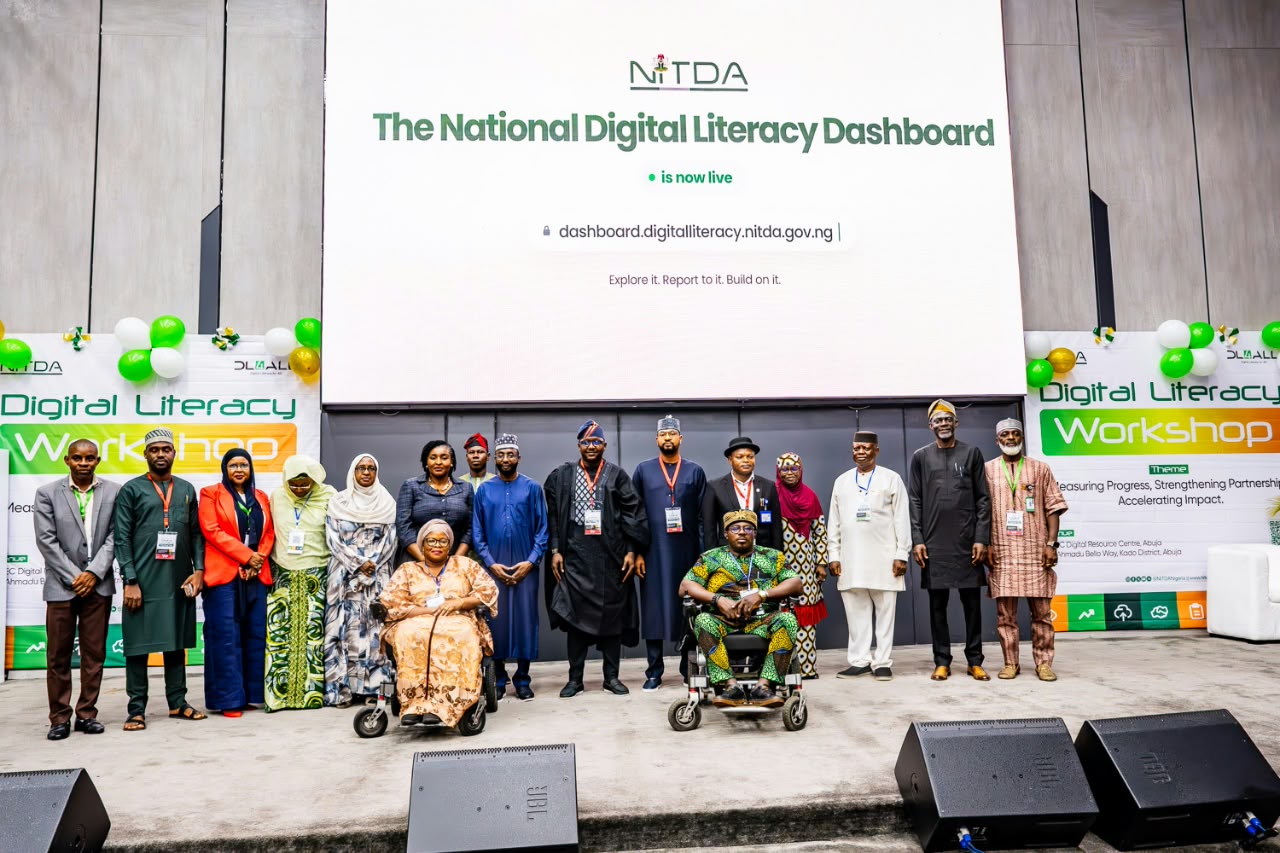
The National Information Technology Development Agency (NITDA) has recorded 2,769,512 digital literacy training achievements across Nigeria in the last three years, representing 5.54 per cent of its target of reaching 50 million beneficiaries by 2027.
The figure was disclosed at the 2026 National Digital Literacy Workshop in Abuja, where NITDA unveiled the National Digital Literacy Dashboard to coordinate training interventions and track progress towards the country’s digital literacy targets.
The dashboard shows that 252 organisations are reporting digital literacy activities across the 36 states, the Federal Capital Territory and all 774 local government areas.
Speaking at the workshop, NITDA Director-General, Kashifu Inuwa, said digital literacy had become as fundamental as reading, writing and numeracy, particularly as technology and artificial intelligence continued to transform economic and social activities.
“Our ambition is not to turn every Nigerian into an IT professional. Our ambition is to make every Nigerian digitally capable,” he said.
Inuwa explained that digital skills would enable traders to manage business records and receive electronic payments, farmers to access weather forecasts and market information, and teachers to improve classroom learning.
According to the dashboard, young people below 35 account for 2,092,697 training achievements, while informal-sector workers represent 1,609,183. Women account for 32.9 per cent of beneficiaries, while 65,767 rural residents and 17,156 persons with disabilities have been reached.
Cisco recorded the highest number of training achievements among contributors, with 1,073,604, followed by NITDA with 960,424 and Meta Platforms Inc. with 333,816.
The director-general said the dashboard would help identify underserved communities, prevent duplication of interventions and ensure better coordination among stakeholders.
He, however, cautioned that training achievements should not be interpreted as the number of unique Nigerians who had attained measurable digital proficiency.
He stressed the need to assess participants’ competencies and determine how acquired skills improve their livelihoods, businesses and productivity.
The initiative is anchored on the National Digital Literacy Framework established in 2023, which covers six areas, including digital safety, information literacy, content creation and problem-solving.
Launched in 2024, NITDA’s Digital Literacy for All programme supports the Federal Government’s target of achieving 70 per cent digital literacy by 2027 and 95 per cent by 2030.
Stakeholders at the workshop called on state governments, technology companies, educational institutions and civil society organisations to register their interventions and provide credible data to support the national drive.










Leave a Reply