

By Florence Joshua
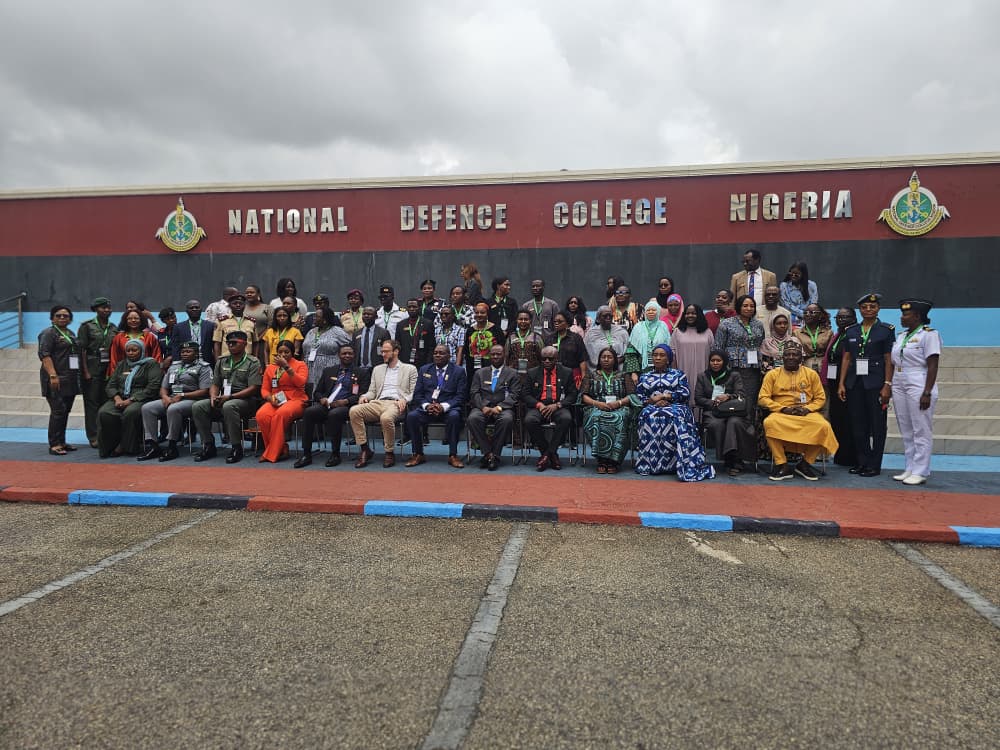
ABUJA — The National Defence College (NDC) and the Friedrich-Ebert-Stiftung (FES) have renewed calls for stronger gender-responsive leadership and closer collaboration among security institutions to improve peace, security and governance in Nigeria.
The call was made during a two-day Strategic Exchange Programme on Peace and Security Leadership for Gender Desk Officers held in Abuja. The workshop brought together gender desk officers from the military, paramilitary agencies and civil society organisations to examine the challenges facing gender units and explore practical solutions.
Speaking at the opening, the Commandant of the National Defence College, Rear Admiral Abdullahi Ahmed, represented by Air Commodore Edmund Oluokun, said gender considerations are critical to every aspect of national security, from policy formulation and military operations to policing and community safety.
He stressed that sustainable security requires the participation of women, men, girls and boys in identifying security threats and developing solutions.
“There is no aspect of security that is untouched by gender. Gender-responsive leadership helps dismantle systemic barriers, promotes inclusion and strengthens security outcomes through diverse perspectives,” he said.
Ahmed noted that Nigeria’s security institutions have made progress by establishing gender units and creating more opportunities for women in leadership and operational roles. He added that the workshop would enable participants to share experiences, identify institutional gaps and develop collaborative strategies for more effective gender-responsive security delivery.
Provost of the National Defence College, Prof. Adam Ahmed, described the institution’s Centre for Strategic Research and Studies as a leading platform for advancing research on peace and security. He said the renewed partnership with FES would further strengthen gender mainstreaming across the security sector.
While advocating greater inclusion of women, he maintained that professional standards must remain uncompromised.
“Gender inclusion should ensure equal opportunities without lowering existing professional standards,” he said.
Representing the National Women’s Platform on Security Sector Reform and Governance, Prof. Plangsat Bitrus said the platform was established to promote gender mainstreaming within security institutions and at the community level.
She said women continue to play significant roles in intelligence gathering, conflict resolution and community peacebuilding, adding that excluding them from peace and security processes weakens efforts to achieve lasting peace.
“When women are left out of peacebuilding and security decision-making, a significant part of society is excluded from finding sustainable solutions,” she said.
Earlier, FES Resident Representative in Nigeria, Lennart Oestergaard, said the German foundation remains committed to promoting democracy, social justice and inclusive security sector reforms in Nigeria.
He disclosed that the organisation, with support from the German Foreign Office, is implementing programmes aimed at strengthening democratic governance within Nigeria’s security sector.
According to him, gender equality remains at the heart of FES’s work because lasting social justice cannot be achieved without it.
As part of the workshop, participants engaged in intensive training sessions and group discussions focusing on the operational realities of gender units across security agencies.
Several gender desk officers identified inadequate staffing, limited funding, insufficient institutional support and capacity gaps as major challenges affecting the effectiveness of gender units.
Participants called for increased budgetary allocation, improved manpower, continuous professional training and stronger institutional backing to enable gender desks effectively promote inclusion and contribute to peace and security operations.
The workshop concluded with renewed commitments by stakeholders to strengthen collaboration and build more responsive gender structures within Nigeria’s security architecture.










Leave a Reply